
Two races, no statewide measures, and a rematch at the top.
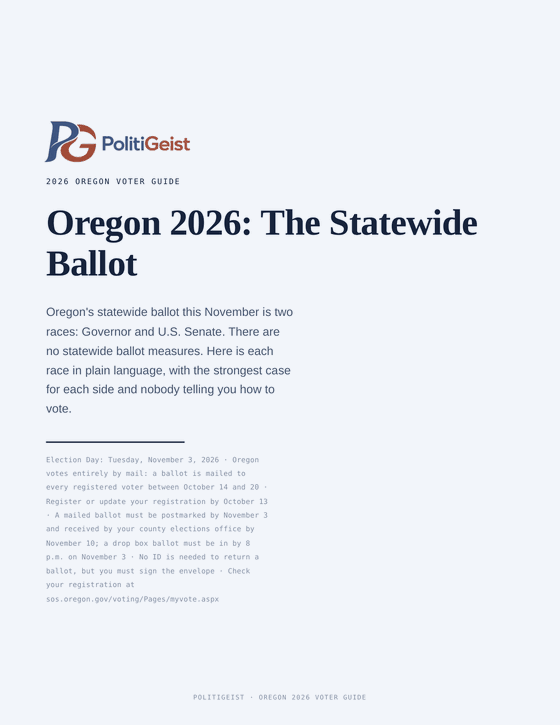
Oregon's statewide ballot is short this year: Tina Kotek against Christine Drazan for governor, a rematch of 2022, and Jeff Merkley against David Brock Smith for U.S. Senate. There are no statewide measures. Here it is in plain language, with nobody telling you how to vote.
- Both sides, no spin
- Vote-by-mail rules explained
- Sourced & cited
- Instant PDF download
The strongest case for each side
For both races, the best honest argument each way. Equal space, no endorsement.
Every governor poll was sponsored
None of the published polls in the governor's race is independent. We list each one with who is behind it, so you can weigh them yourself.
Why there are no measures
No initiative or legislative referral qualified for the statewide ballot, which reporting describes as a first for an even-numbered year since 1966. Your county pamphlet may still list local measures.
Sourced, not spun
Every factual claim is tied to reporting and official records, listed at the back.
What's inside
The governor's race and the U.S. Senate race.
Governor
Tina Kotek against Christine Drazan, the same two candidates as 2022, after voters rejected the transportation-tax law Kotek signed.
U.S. Senate
Jeff Merkley seeks a fourth term against state Sen. David Brock Smith.
Mail ballots
When your ballot arrives, the postmark rule, the drop-box deadline, and why to send it early.
Get the full 2026 Oregon Voter Guide
The governor's race and the U.S. Senate race. Instant PDF download.
Get the guide · $3.99What format is it?
A PDF you download the moment you buy. Read it on your phone or computer, or print it to take to the polls.
Is it partisan?
No. PolitiGeist is independent and makes no endorsement in either race. The point is the strongest case for each side.
What does it cover?
Governor and U.S. Senate, the only two contested statewide offices on the ballot. There are no statewide measures this year. The Bureau of Labor and Industries commissioner and the state's appellate court seats were decided at the May primary, and Secretary of State, Treasurer, and Attorney General aren't up until 2028. U.S. House, legislative, and local races aren't included.
Why is Oregon cheaper than other states?
Because the statewide ballot is genuinely shorter. Pricing follows how much is actually on it, not a flat rate per state.